
The Carbon Pump Effect: How Healthy Soils Can Change Farming and the Future
A look at the “carbon pump” and why soil biology is key to stronger crops and a stronger climate.
Michael K.
9/3/20253 min read
Walk across a field, and you can feel the story in the soil. Sometimes it’s rich and spongy, alive with the smell of earth. Other times it’s thin, dry, and tired, a reminder that our soils aren’t what they used to be. Decades of heavy use, fertilizer dependence, and unpredictable weather have left too many fields depleted.
But here’s the hopeful part: nature has always had a built-in system for rebuilding soil. Scientists call it the carbon pump effect.
Nature’s Underground Engine
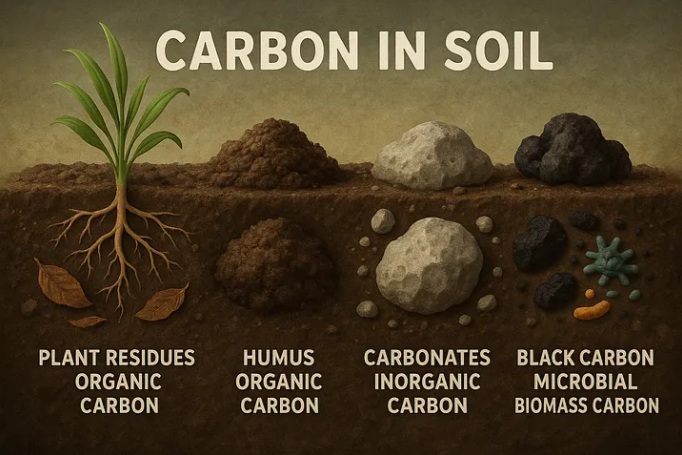
Plants don’t just grow leaves and stems. Underground, they’re busy pulling carbon dioxide out of the air and turning it into sugars. Some of those sugars leak out through their roots, feeding the tiny microbial world living in the soil.
And those microbes? They don’t waste a thing. They take that carbon-rich food and lock it away as organic matter, the stuff that makes soil dark, healthy, and alive. It’s nature’s way of keeping carbon in the ground and giving farmers the fertile foundation they rely on.
Think of it like a hidden engine: plants fuel it, microbes run it, and the soil becomes stronger every time the cycle repeats.
The Trouble With Modern Soils
Here’s the challenge: in many fields today, that engine is sputtering. Organic matter is too low. Water runs off before roots can use it. Nutrients slip away instead of sticking around. And with warm or wet conditions, carbon often escapes back into the atmosphere faster than it can be stored.
It leaves farmers in a tough spot, pouring in more inputs, but still fighting against tired soil that doesn’t hold up the way it should.
Giving the Pump a Boost
That’s where Living Water comes in. The idea is simple: every time you irrigate, you also add a steady trickle of beneficial microbes. Instead of fading away after a single application, these microbes keep the underground system running at full speed.
Roots release more exudates (those sugary leaks that microbes love).
Microbes grab the carbon and turn it into stable organic matter.
Soil slowly transforms into something that holds water, keeps nutrients in place, and supports stronger crops.
For farmers, the result isn’t abstract. It’s fewer sleepless nights worrying about inputs. It’s the fields that stay moist longer. It’s crops that don’t fold under stress quite as easily.
Inoculate. Stimulate. Every time you irrigate.
Why This Matters Beyond Farming
Even if you’re not a farmer, this story still matters. The carbon pump effect is one of the most natural and effective ways to keep carbon out of the atmosphere.
A small change underground adds up to a big difference above it:
Just a 1% increase in soil organic matter can hold about 20,000 gallons of water per acre, huge in drought-prone regions.
Stronger soils cycle nutrients more efficiently, meaning less waste and fewer chemicals leaching into waterways.
Most importantly, carbon that might have escaped into the air stays safely stored in the soil.
This isn’t science fiction or some new high-tech gadget. It’s nature doing what it’s always done; we’re just learning how to help it along.
For farmers: stronger soils, stronger crops, stronger bottom lines.
For scientists and investors: a scalable, measurable way to rebuild soil carbon and resilience in agriculture.
For all of us: a reminder that some of the best climate solutions are already beneath our feet.
Soil isn’t just where farming happens. It’s where the future of farming, and maybe even our climate, begins.